Understanding Dolby Atmos Soundbars
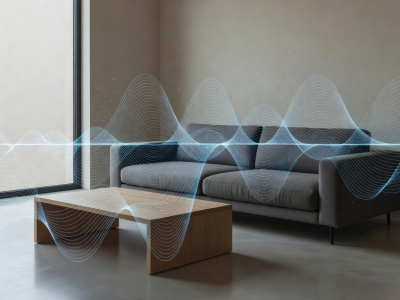
The landscape of home cinema has been fundamentally shifted by the introduction of object-based audio, with Dolby Atmos leading the charge. Unlike traditional channel-based audio formats (such as 5.1 or 7.1 surround sound), Dolby Atmos frees sound from specific speaker assignments. Instead, audio engineers treat individual sounds as "objects" that can be positioned anywhere in a three-dimensional space, including overhead.
How Atmos Works in a Soundbar Form Factor
Bringing object-based audio into a single, horizontal bar positioned below a television presents significant acoustic challenges. Full theatrical Atmos setups utilize dedicated in-ceiling speakers. To recreate this in a soundbar, manufacturers employ a technique known as acoustic reflection.
Up-firing Drivers: A true Atmos soundbar features dedicated drivers angled upwards toward the ceiling. These drivers fire sound waves that bounce off a flat ceiling and descend toward the listening position. When executed correctly, the human brain interprets these reflected sound waves as originating from above, creating the illusion of height without the need for ceiling installation.
The Reflection Requirement
For up-firing drivers to work effectively, your room must have a flat, acoustically reflective ceiling (such as drywall or plaster) that is typically between 7.5 to 12 feet high. Vaulted, angled, or heavily acoustically treated ceilings will scatter the sound waves, breaking the illusion.
Virtual Atmos vs. True Atmos
As Dolby Atmos has grown in popularity, the branding has found its way onto devices at various price points, leading to a critical distinction consumers must understand:
- True Atmos (Hardware-based): These soundbars possess dedicated, physical up-firing speakers. They are usually categorized by three-digit number formats (e.g., 5.1.2), where the third number denotes the dedicated height channels.
- Virtual Atmos (DSP-based): More affordable models may lack physical height drivers entirely (e.g., a 2.1 or 3.1 setup). Instead, they rely on Digital Signal Processing (DSP) and psychoacoustic algorithms to trick the ear into perceiving height. While software has improved drastically, virtual Atmos generally cannot match the distinct spatial separation of physical up-firing drivers.
Connectivity Requirements: ARC vs. eARC
To experience Dolby Atmos, your television and soundbar must communicate via HDMI. Optical cables simply lack the bandwidth necessary to transmit object-based audio formats.
Within HDMI connections, there are two primary protocols:
- HDMI ARC (Audio Return Channel): Can transmit lossy Dolby Atmos embedded within a Dolby Digital Plus signal. This is standard for most streaming services (like Netflix or Disney+), which compress audio to save bandwidth.
- HDMI eARC (Enhanced Audio Return Channel): Possesses significantly higher bandwidth, allowing for the transmission of lossless Dolby Atmos via Dolby TrueHD. This is crucial if you are playing physical media, such as 4K UHD Blu-ray discs, which contain uncompressed audio tracks.
Choosing the Right Configuration
When evaluating specifications, the channel configuration numbers tell a comprehensive story. A 7.1.4 configuration implies seven ear-level channels (front left, center, front right, two side surrounds, two rear surrounds), one subwoofer channel, and four dedicated height channels (typically two front up-firing on the bar, and two rear up-firing on satellite speakers).
If you aim for peak immersion, investing in a system that includes dedicated wireless rear surround speakers with their own up-firing drivers will provide a complete "bubble" of sound, effectively rivaling traditional receiver-based setups without the complex wiring overhead.